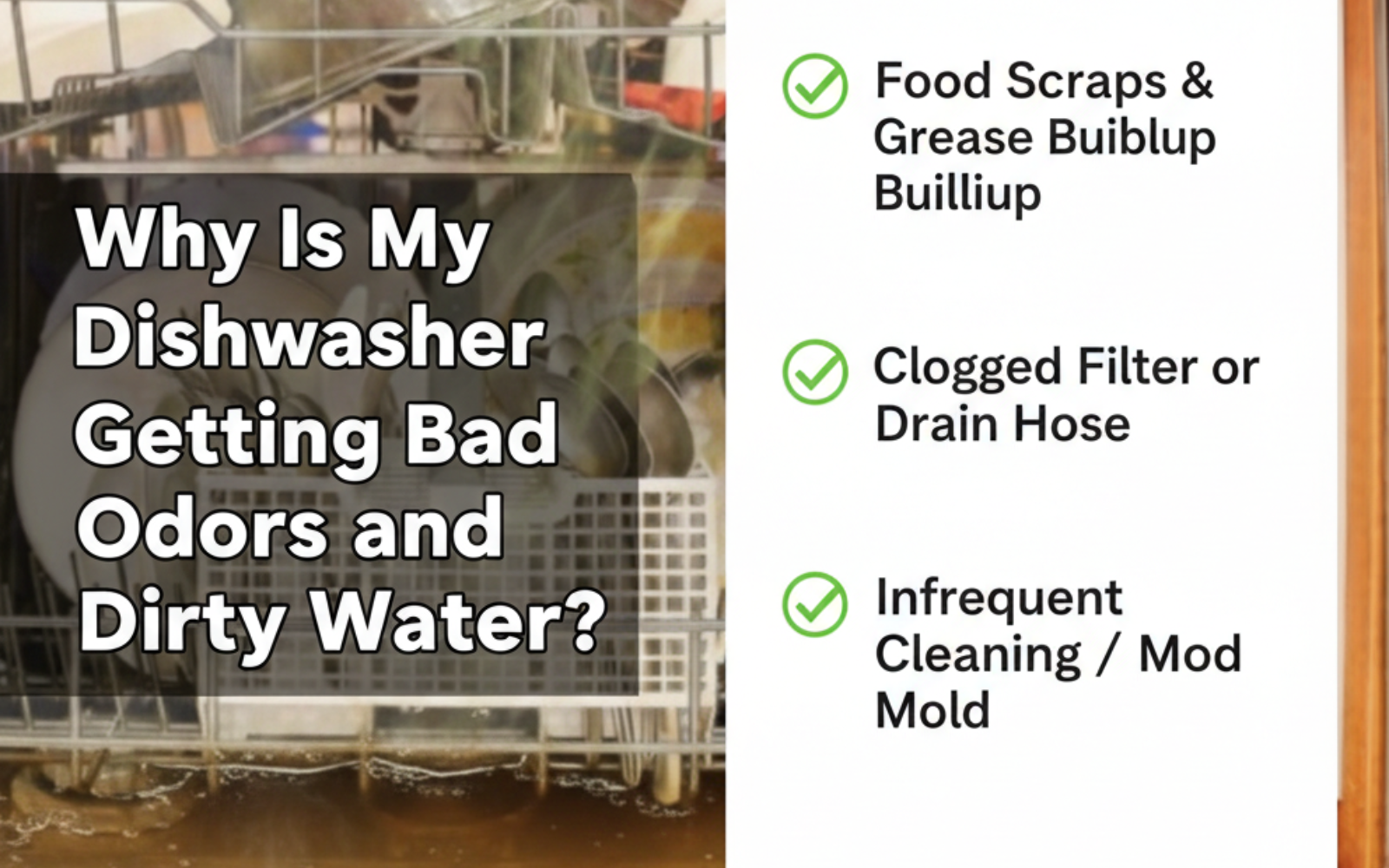
If you’ve noticed your dishwasher smells bad, the water looks dirty, and your dishes are coming out less than clean you’re not alone. This is one of the most common dishwasher complaints homeowners face. But here’s the surprising truth: the problem is rarely the dishwasher itself. Before you call a repair technician or shop for a new appliance, read this guide. These six easy-to-check causes are responsible for the vast majority of dishwasher odor and dirty water issues, and most of them you can fix yourself in minutes.
The Root of the Problem: Why Your Dishwasher Smells and Leaves Dirty Dishes
When a dishwasher starts producing foul smells and murky water, most homeowners immediately assume something inside the machine is broken. In reality, the culprit is almost always something happening outside the dishwasher in the drain system, disposal, or filter. Let’s break down each cause.
1. A New Garbage Disposal Was Installed and the Knockout Plug Wasn’t Removed
This is the #1 cause of sudden dishwasher drainage problems, and it trips up even experienced plumbers.
When a brand-new garbage disposal is installed, it comes with a small nickel knockout plug inside the dishwasher drain port. This plug is there by default but it must be manually popped out if you plan to connect your dishwasher drain to the disposal.If the plug isn’t removed, dirty water from your dishwasher has nowhere to go. It backs up, sits stagnant, and creates exactly the kind of foul smell and dirty water that homeowners report. What to do: If you recently had a new disposal installed and your dishwasher problems started shortly after, this is almost certainly your issue. Have a plumber or handy person remove the knockout plug from the disposal’s dishwasher inlet port.
2. A Clog at the Air Gap or Drain Hose
If you look under your kitchen sink or on the top of the countertop near the sink, you may see a small chrome cylinder that’s the air gap. It prevents dirty sink water from flowing back into your dishwasher. Over time, debris and grease can clog it. If your home doesn’t have an air gap, the same principle applies to the drain hose that runs from your dishwasher to the disposal or sink drain. Grease, food particles, and soap scum can accumulate and cause a partial or full blockage.
What to do: Clean the air gap by removing its cap and clearing out any debris. If there’s no air gap, inspect the drain hose for kinks or clogs and clear them.
3. The Drain Hose Check Valve Is Out of Place
Many dishwashers have a check valve in the drain hose. Its job is simple but critical: it allows water to flow out of the dishwasher but prevents dirty water from flowing back in.
If this valve shifts out of position, becomes stuck, or wears out, contaminated water can re-enter your dishwasher after each cycle. The result? Stinky, dirty dishes even after a full wash.
What to do: Inspect the check valve on your drain hose. If it’s dislodged, reposition it. If it’s cracked or worn, replace it they’re inexpensive and widely available at hardware stores.
4. Your Disposal or Sink Drain Is Backing Up Into the Dishwasher
Here’s something most people don’t realize about how dishwashers work: the drain pump creates flow, not pressure. What actually pushes water out efficiently is the difference in pressure throughout the drain system.
If your garbage disposal is partially clogged, or your sink drain is sluggish, that backed-up dirty water doesn’t just stay in the sink. It can flow backward through the shared drain connection and right into the bottom of your dishwasher.
What to do: Run your garbage disposal before starting a dishwasher cycle. If your sink drains slowly, address that clog first. A healthy sink and disposal system means a healthy dishwasher.
5. Your Dishwasher Filter Is Dirty
Many modern dishwashers have a removable filter located at the bottom of the tub (usually near the spray arm). Unlike older models with self-cleaning filters, these manual filters need regular attention.
When food particles, grease, and debris accumulate in the filter, they don’t just reduce cleaning performance they create a breeding ground for bacteria that causes that unmistakable mildew or rotten smell.
What to do: Check your owner’s manual to locate and remove the filter. Rinse it under warm water, use a soft brush to scrub away build-up, and replace it. Clean your dishwasher filter at least once a month for optimal performance and to prevent odors.
6. The Drain Pump Is Actually Broken
This is the least common scenario, but it does happen. If your dishwasher’s drain pump has failed, it won’t be able to push water out at the end of a cycle. You’ll likely notice standing water at the bottom of the tub after a cycle finishes.
A broken pump means water just sits there getting stagnant, breeding bacteria, and recirculating through every subsequent wash.
What to do: If you’ve ruled out all the above causes and still find standing water in your dishwasher after each cycle, it’s time to call a technician to inspect or replace the drain pump.